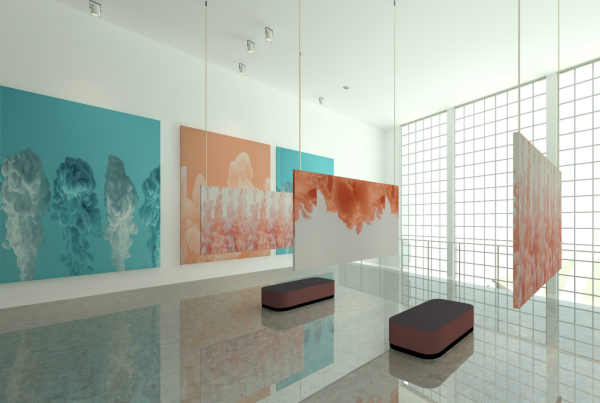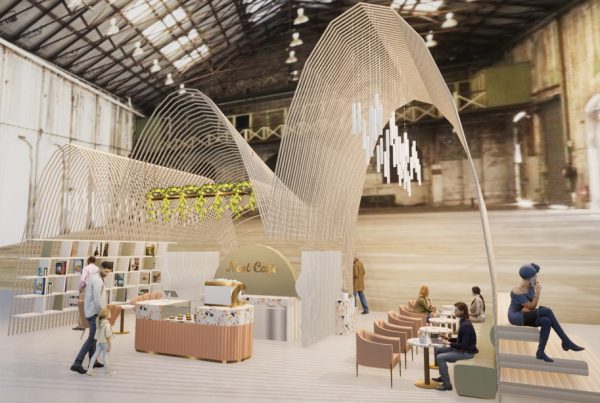

Imagine your first meeting with a client. They walk in with 10 AI-generated images of their home. Each one looks beautiful. The light is perfect. The furniture is luxurious.
But you quickly spot that the spaces are out of scale, off budget and impractical. Few of the images could actually be achieved. This is the new normal for many studios and it has some asking: will AI eventually replace us?
If you’re considering an interior design career, it’s a question worth diving into.

Is AI changing the Interior Designer's role?
AI is certainly becoming an invaluable tool and it’s improving all the time. But it only supports a role that requires human judgement, creative intuition and personal relationships. AI can speed up mood boards, renders and admin. It can’t reliably read a client, manage the people on a project or take responsibility for a result.
AI takes over repetitive production, such as detailed client presentations. That moves a Designer’s focus to problem solving, curation and decision-making. Some even train AI to learn their signature style and preferences. Clients also want faster turnarounds and arrive better informed, so managing their expectations is now part of the job.
How Interior Designers are using AI today
According to a national survey of Australian interior design students, educators and professionals, attitudes to AI are positive, even among those who haven’t used it yet. International Journal of Design Creativity and Innovation.
Common uses include:
- Concepts and mood boards: Tools like Midjourney, ChatGPT and Claude generate ideas in minutes, but they only remix images that already exist.
- Renders and virtual staging: Sketches and photos become polished visuals fast, so clients can see a room restyled before they buy anything.
- Space planning: AI drafts layouts in seconds, although many wouldn’t work in a real room.
- Sourcing and colour: AI matches palettes and products to a brief.
- Admin: Proposals, client emails and FF&E schedules (furniture, fixtures and equipment) take a fraction of the time.


What can't AI do in interior design?
This is the human advantage. AI can’t reliably:
- Interpret a client’s taste and identify unspoken needs.
- Feel how a space works. Light, acoustics, texture and scale need a person on site.
- Bring cultural context and a distinct point of view.
- Weigh budgets and trade-offs on a live project.
- Make serendipitous connections. An unexpected pairing, a chance find or a hunch becomes a space no algorithm would plan.
- Take responsibility for accuracy. Clients want a person accountable for the outcome.
Simone LeAmon, CEO of the Design Institute of Australia, agrees. Writing in ArchitectureAu in October 2026, she says a convincing image can’t show whether a design is safe, appropriate or achievable. That’s why the DIA Code of Conduct requires Designers to be open with clients about how they use AI.
“Technology can support our creativity, but it can’t replace the emotional, intuitive parts of design.”
Ben Aranda, founder of ArandaLasch
Relationships and experience matter
Designers are also great with people. Good relationships get stock delivered faster, keep builders on site to finish a job and help clients see the bigger picture. Every project has nervous homeowners, trade schedules and supplier deadlines, and things go wrong. Designers wrangle all of it, and that takes trust, patience and communication.
Experience matters too. It lets Designers review AI work and spot a door that can’t open, a bench that’s too low or a material that won’t last. Clients know what they like but rarely know what’s new or where design is heading. Designers track colour trends, furniture lines and global direction, while AI mostly reflects what already exists.


What can we expect by 2036?
Yes. Renders can be wrong and layouts can be impractical today, but the gap between AI and Interior Designers will narrow as tools become more accurate. That doesn’t mean AI takes over. It becomes an even better assistant in a Designer’s hands. By 2036, expect:
- Virtual and augmented reality walkthroughs, so clients can step inside a design before it’s built.
- AI estimates of materials, waste and energy performance.
- Smart homes that learn how people live and adjust lighting, temperature and layout over time.
- New hybrid roles, such as Designers who specialise in directing AI tools.
How can Designers and students prepare?
Start by learning the tools themselves and treat AI as assistants rather than replacements, critiquing their output rather than accepting it at face value. It’s just as important to know where AI gets things wrong, so you can speak confidently with clients about how and why you use it. You’ll also need to understand the copyright implications, since AI-generated images may not actually belong to you or your studio.
Alongside that technical fluency, keep building the human skills no tool can replicate: communication, briefing, negotiation and relationship development. And perhaps most importantly, develop a personal style that’s unmistakably yours, one that keeps evolving rather than standing still.

Is interior design still worth studying?
Yes, because great design still comes from people. It starts with original ideas, personal taste and a deep understanding of clients and the industry. AI isn’t the enemy. It makes work faster. The Designers who thrive will use AI well, but their creativity and human experience will be what clients value most.
AI will keep changing the industry. Explore our interior design courses to see how to build skills that work alongside it.
Photography by: Joshua Grace at Temple & Webster, Saturday InDesign and on campus.